
Me vs endgame retention boost
* * * Design work presented reflects my specific contributions during the project tenure. All trademarks and final production implementations remain the property and responsibility of the respective owners.
* * * Design work presented reflects my specific contributions during the project tenure. All trademarks and final production implementations remain the property and responsibility of the respective owners.
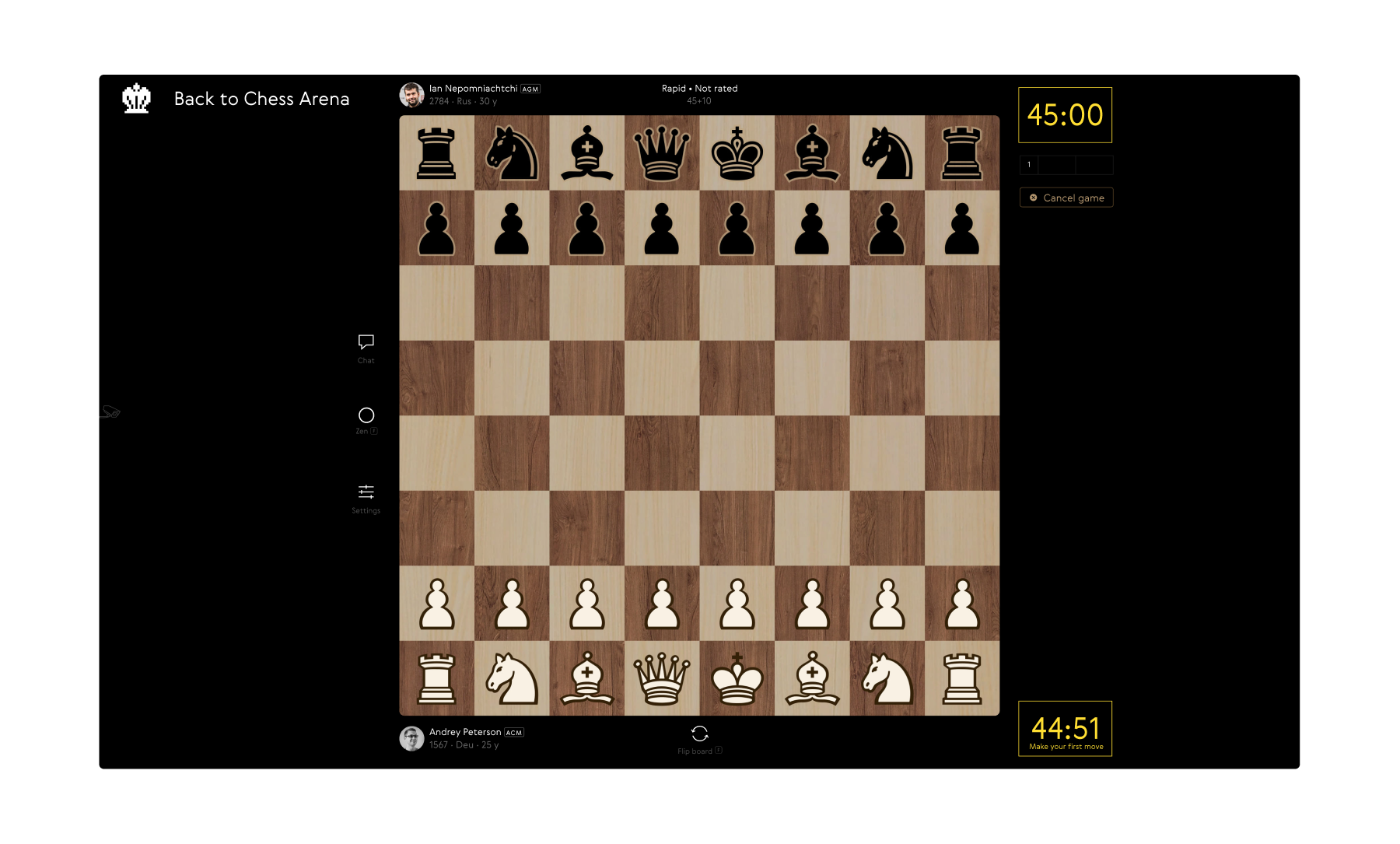
When I joined World Chess, the game screen was the primary source of user friction. Support logs showed a high volume of complaints: players were confused by match endings, struggled to interpret results, and didn't know how to start the next game.
The mobile experience was particularly broken. Key controls were pushed off-screen, and the game analysis tool was buried so far below the board that most users never found it. My objective was to turn the match conclusion into a clear transition point rather than a dead end.
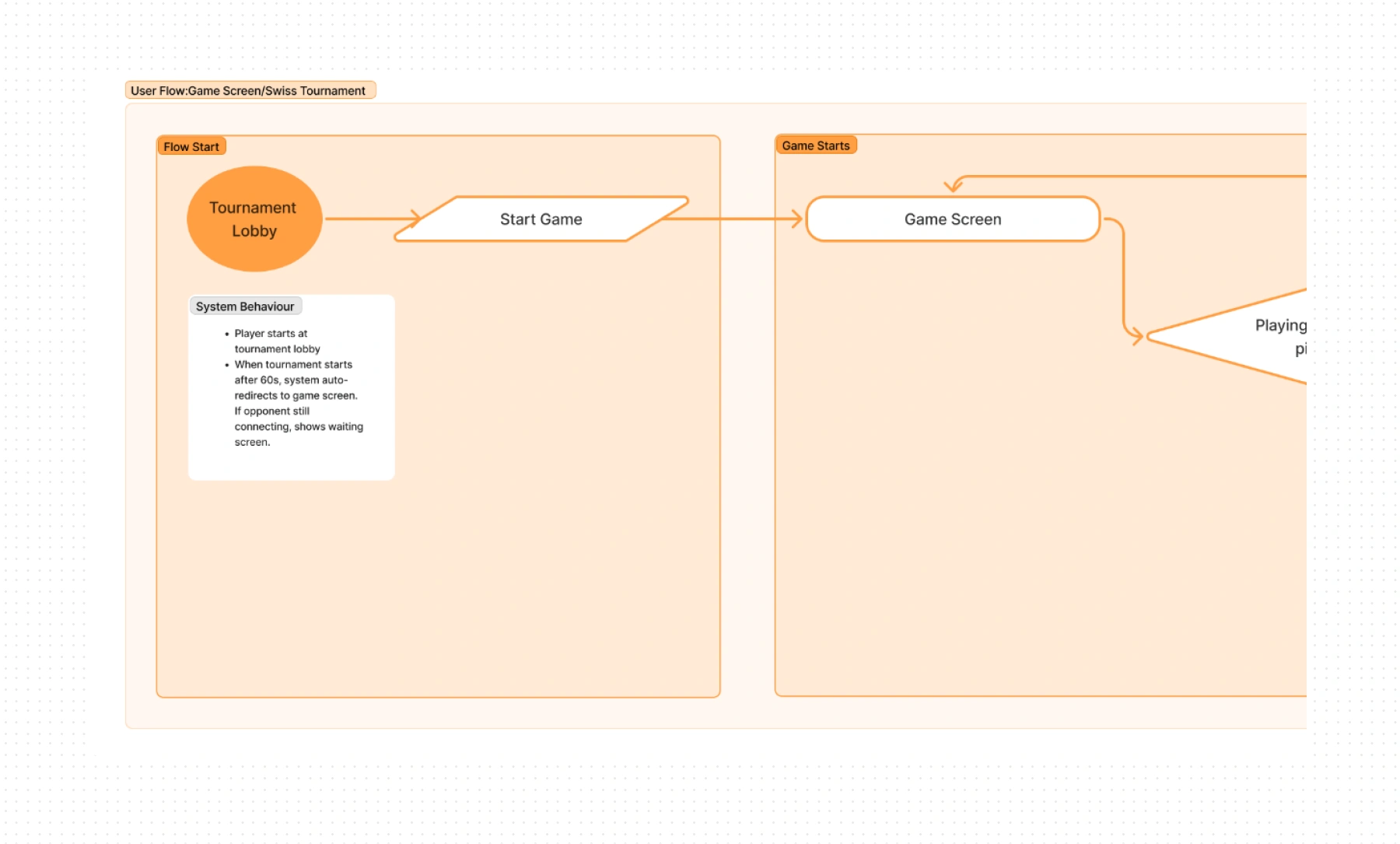
I mapped the end-to-end flow from match start to post-game analysis. Using FigJam, I defined the logic for every user state: guest, free, and PRO.
To keep the game continuous, I redesigned the result banners to act as a bridge. For free users, I introduced "what-if" logic: showing how many rating points or FIDE titles they would have earned if they had a PRO account. It was a direct way to prove the product's value without using generic marketing pop-ups.
Parallel to this, I helped build the foundation of our design system. We worked with developers to turn chess notation, result banners, and analysis panels into reusable components. This upfront investment ensured the UI behaved consistently across all resolutions and significantly cut down development time for subsequent features.
Later, I designed the "Banter Blitz" experience. It’s a live format where users challenge grandmasters. I mapped the entire journey: queue management, session creation, and stream states. I documented every control and account state for web and mobile to ensure the dev and QA teams had a clear spec for implementation.
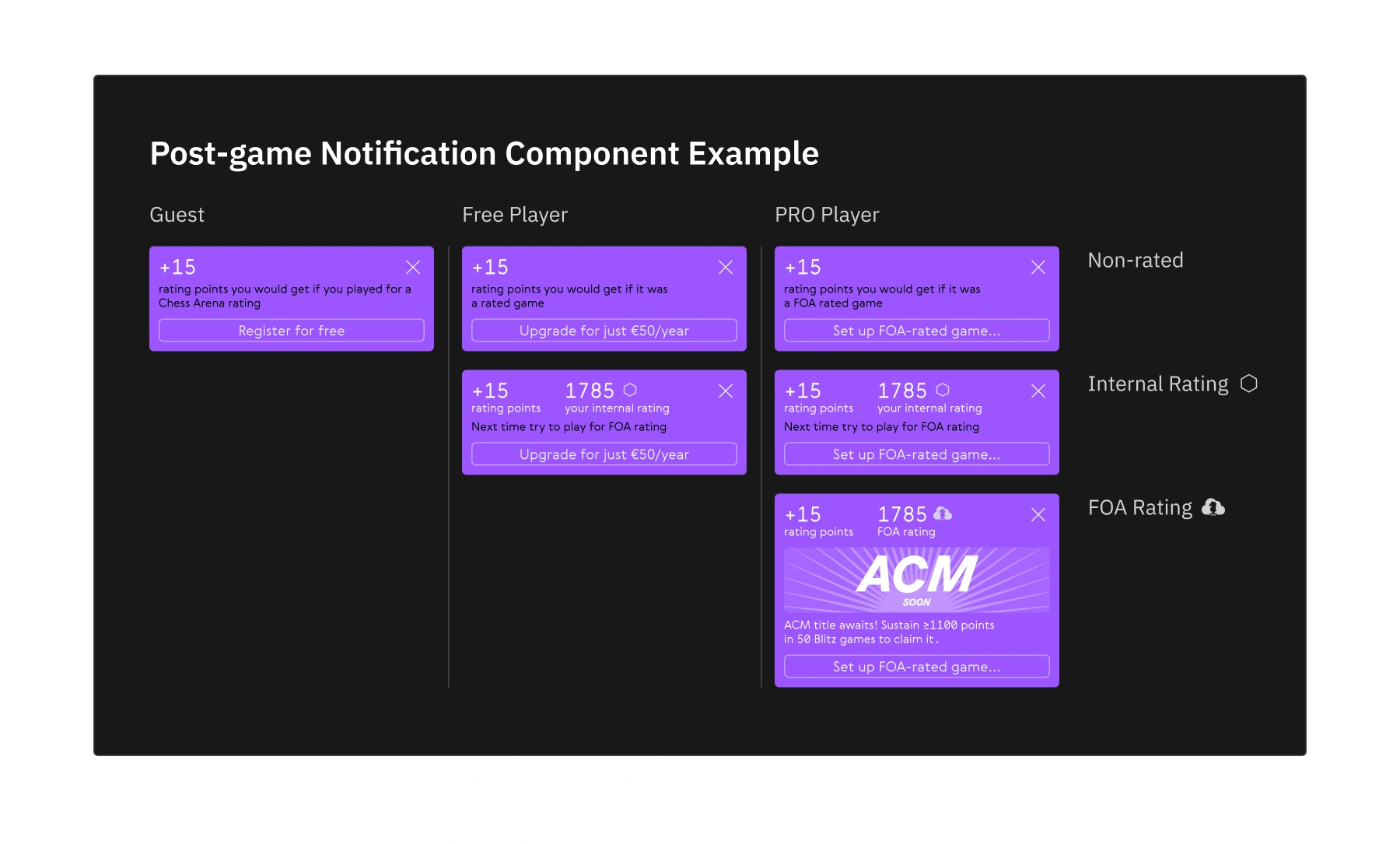
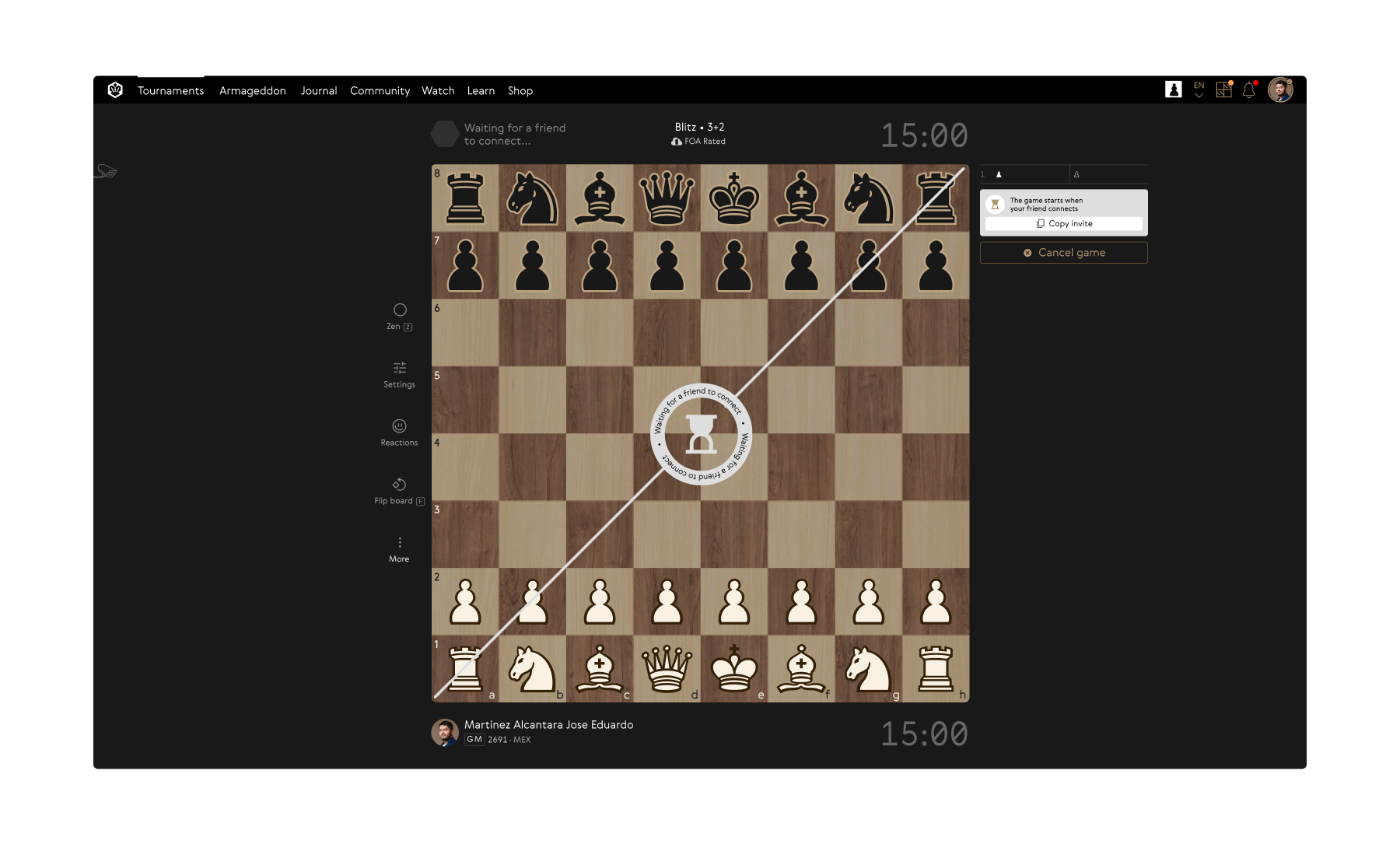
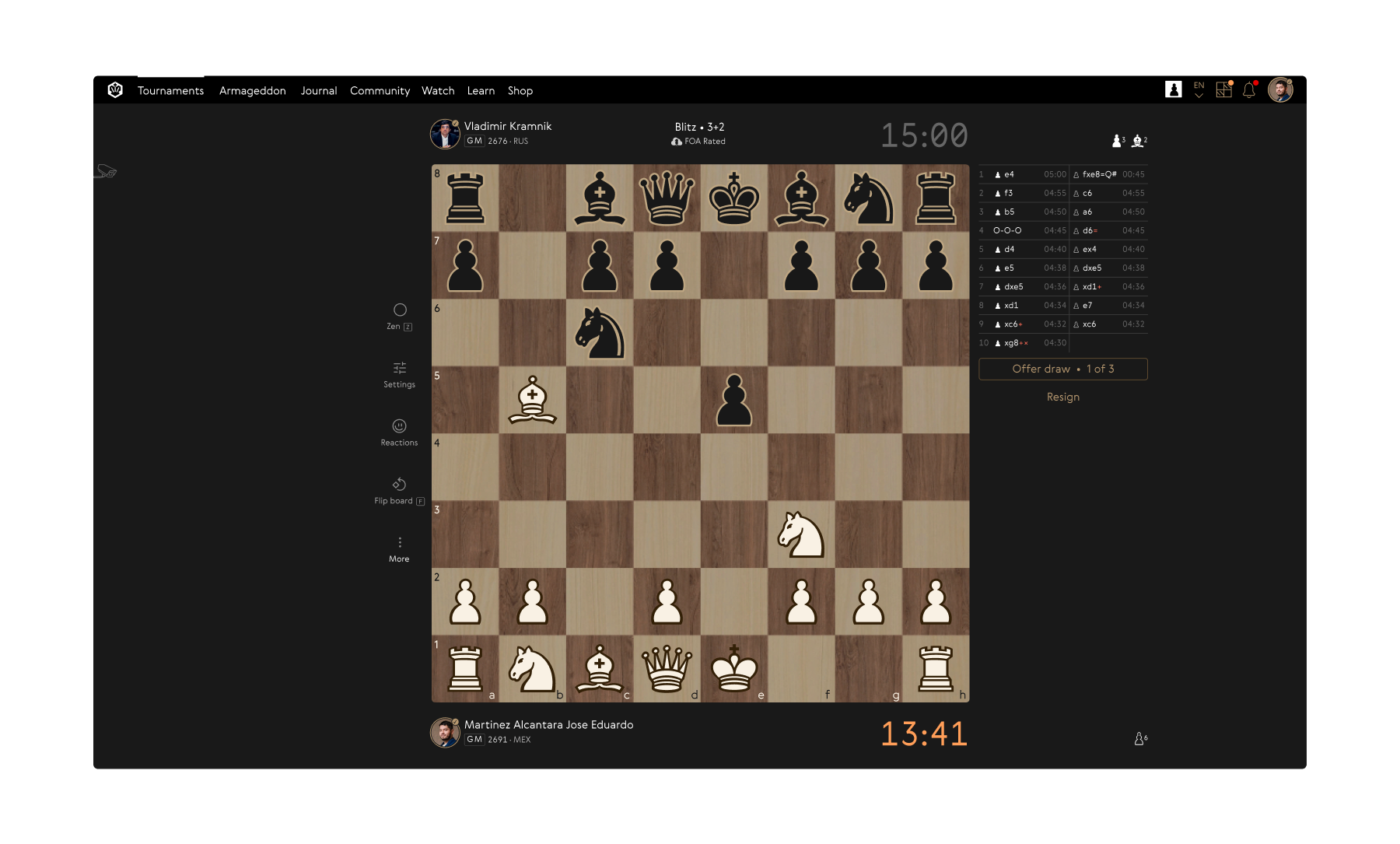
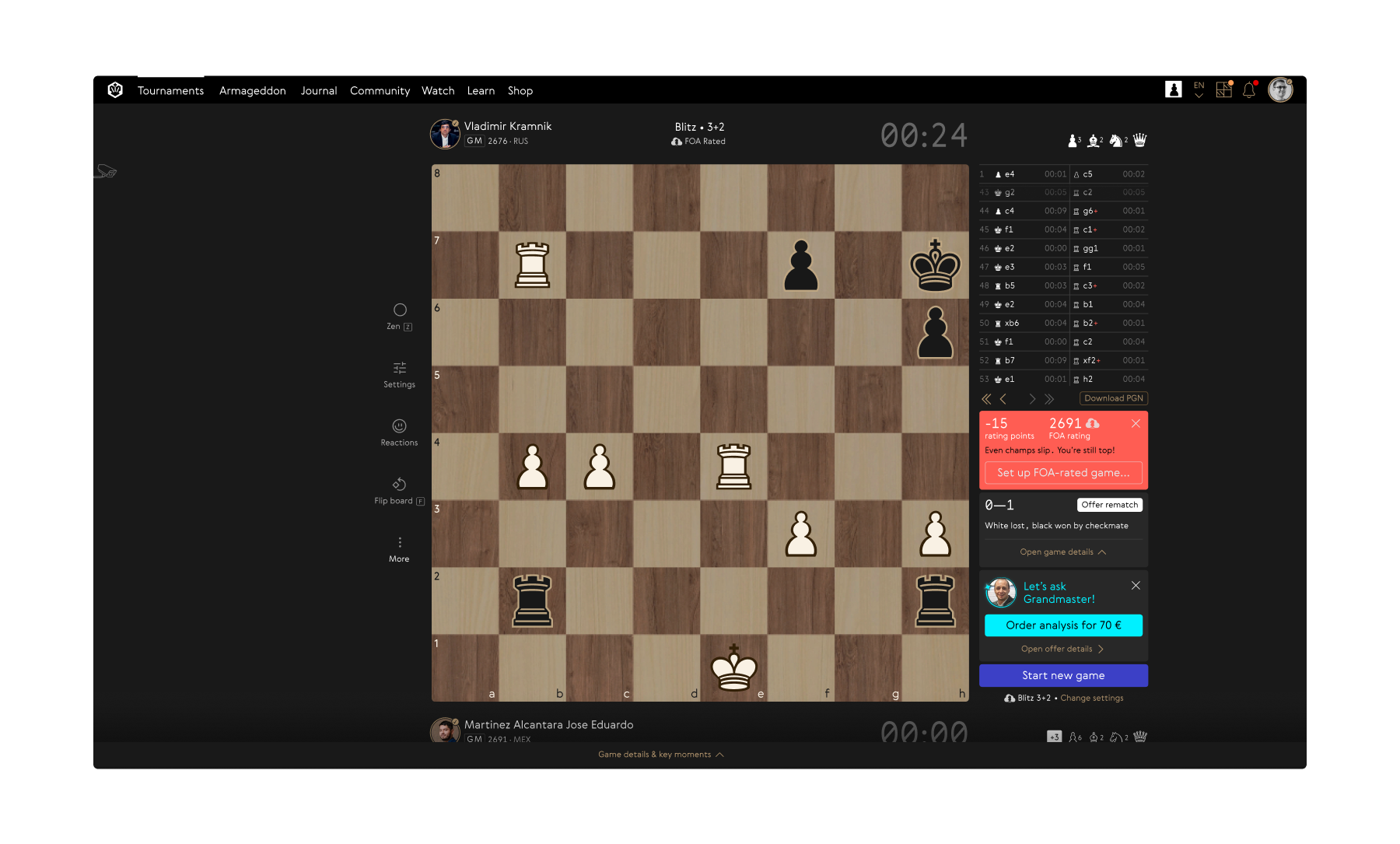
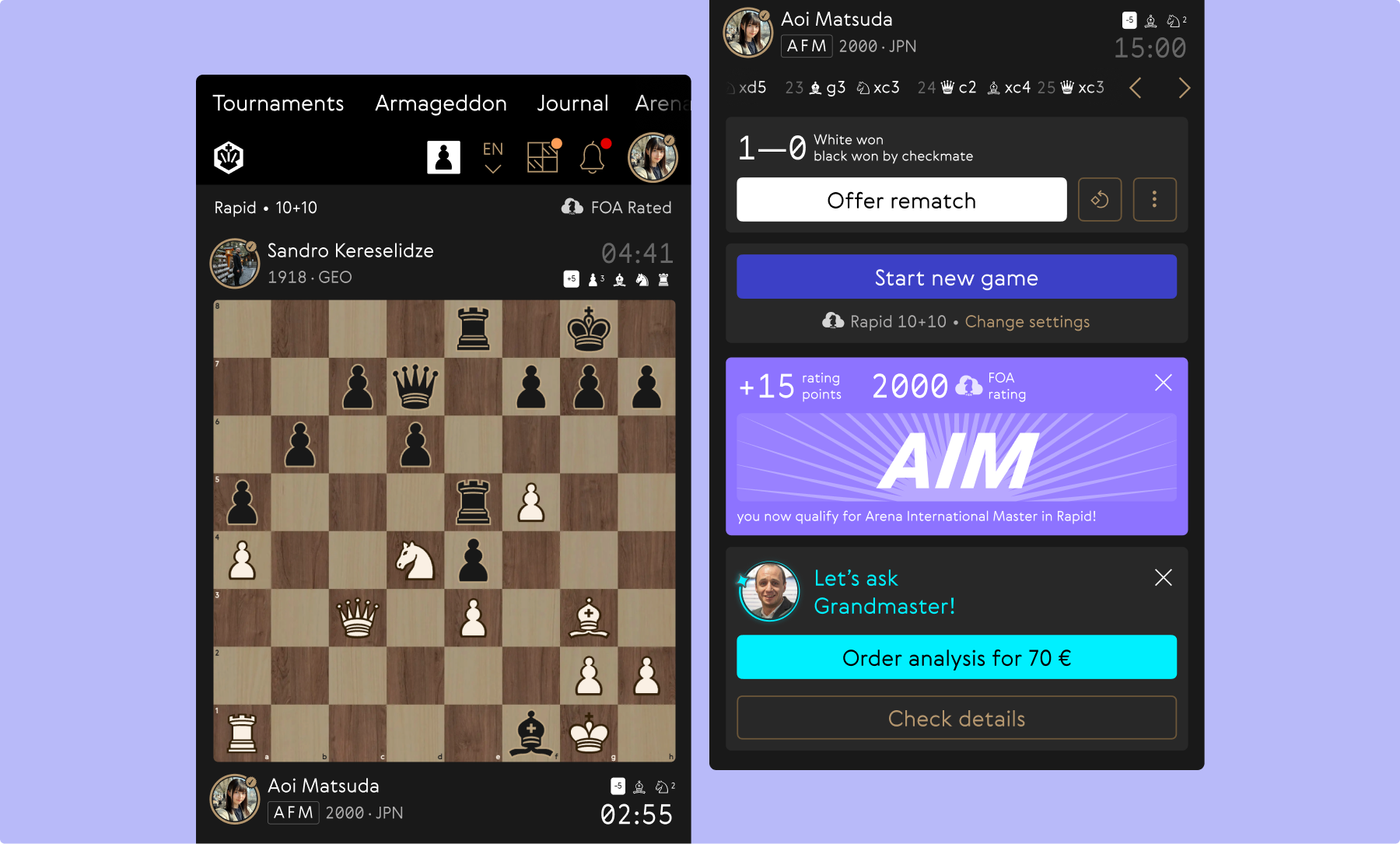
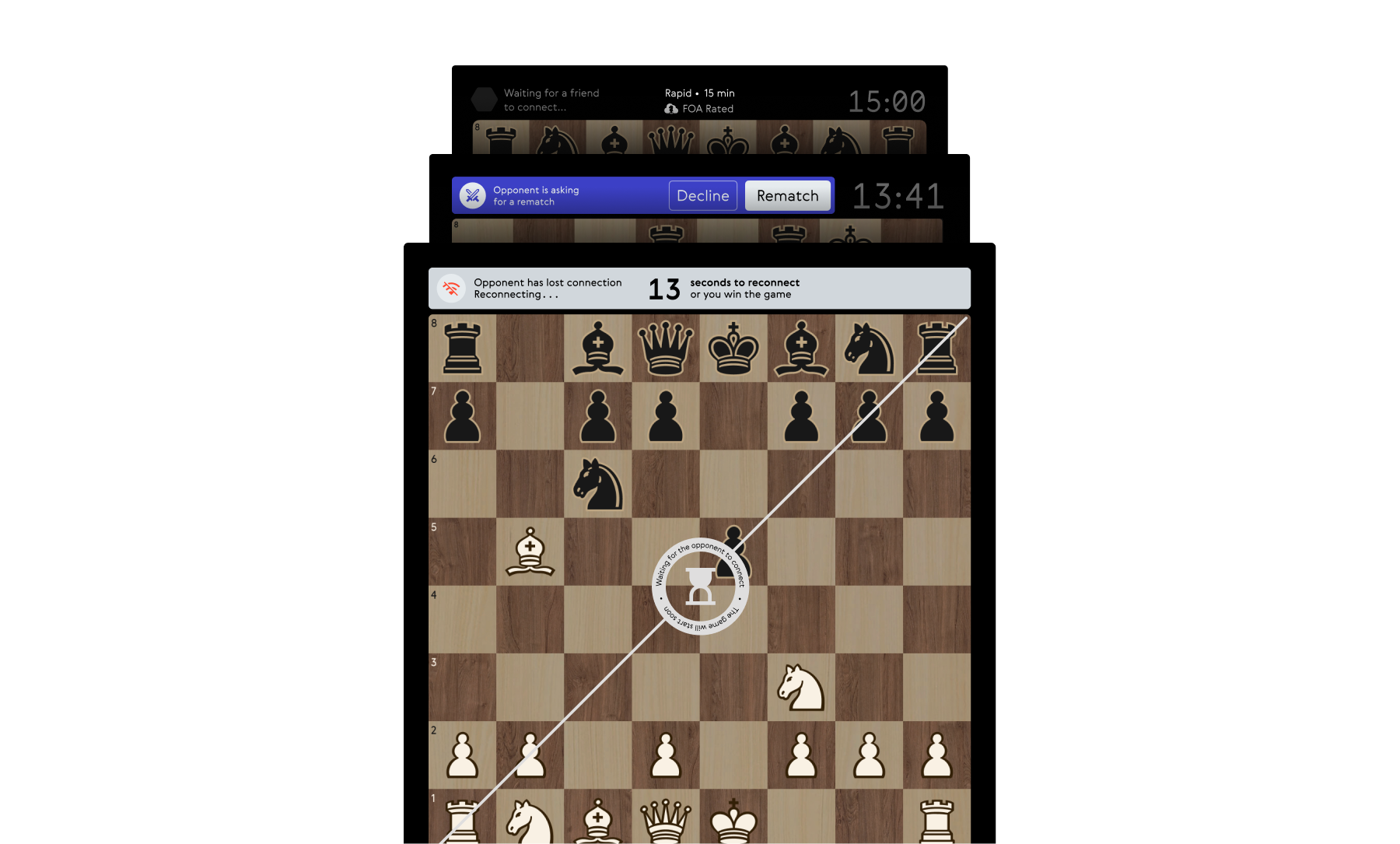
The redesigned game screen turned match results into actionable data. Players now have an immediate view of rating changes and a clear next step based on their account type. On mobile, the analysis tool was moved to a compact bottom sheet that stays accessible without blocking the board. Following the release, the support team reported a measurable drop in tickets related to game-end confusion.